
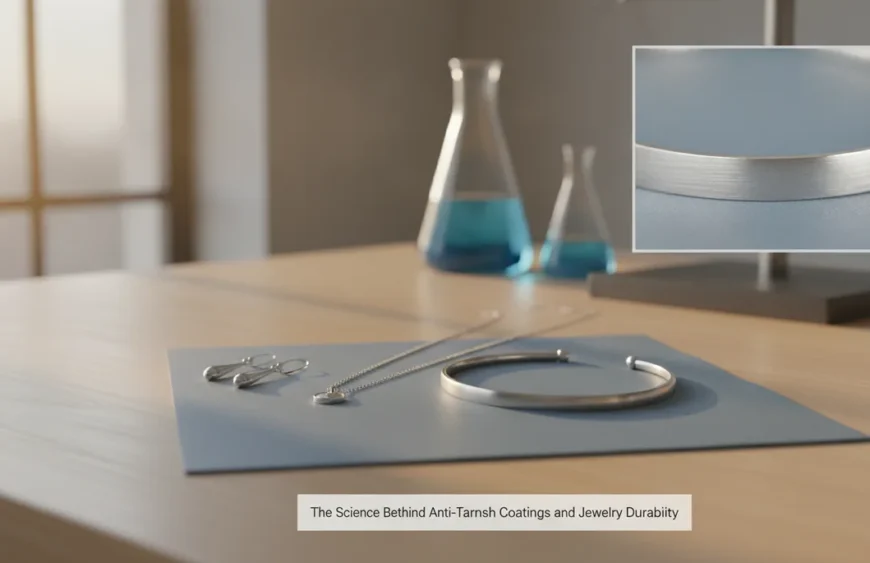
The Science Behind Anti Tarnish Coatings and Jewelry Durability
This article gives a practical, science‑based tour of how anti‑tarnish coatings protect jewelry from dulling during daily wear — useful for consumers who want longer‑lasting pieces and designers choosing finishes for durable collections. ⏱️ 4-min read
Understanding tarnish and why coatings matter
Tarnish is a surface change, not a mysterious curse: many metals react with sulfur compounds in air, body oils, cosmetics, and moisture to form dark or discolored films. Even relatively noble metals can develop surface layers that scatter light differently and make a piece look dull or off‑color.
Anti‑tarnish coatings work by creating a barrier between the metal and whatever would react with it. By slowing or blocking contact with reactive gases, salts, or liquids, these coatings preserve the metal’s original shine and color for longer periods of routine use.
Coating chemistries: what actually makes jewelry anti‑tarnish
There are two broad approaches: barrier coatings (polymeric or thin films) and metallurgical solutions (tarnish‑resistant platings and alloys). Both aim to reduce the metal’s exposure to reactive agents, but they do it in different ways.
Polymer and thin‑film barriers
Clear lacquers, hard resins, and other polymeric films create a physical layer that repels moisture and gases. These coatings are typically thin enough to be nearly invisible but dense enough to restrict diffusion of sulfur compounds and salt from sweat. Their effectiveness depends on film integrity and adhesion to the metal surface.
Metallurgical approaches
Electroplated or deposited layers of more inert metals — such as rhodium, palladium, or ruthenium — protect an underlying metal by presenting a less reactive surface. Specialized alloys can also be engineered for lower reactivity. These metal coatings maintain luster and color while offering a durable, hard surface that resists chemical attack better than base metals alone.
Performance under real‑world conditions: daily wear, humidity, sweat, and washing
Laboratory resistance tests are useful, but real life exposes jewelry to repeated, varied stress: body sweat (which contains salts and acids), humid climates, perfumes and lotions, and cleaning routines. In humid or rainy seasons, moisture accelerates the transport of reactive molecules to the metal surface; during workouts or long wear, salt and oils increase chemical attack.
Coatings must resist breakthrough from repeated contact and abrasion. For pieces worn directly against skin — such as mangalsutra chains, bracelets, or frequently worn earrings — coatings are chosen to minimize discoloration, green staining, and skin reactions while staying cosmetically acceptable through monsoon or high‑sweat conditions.
Durability factors: adhesion, scratch resistance, and long‑term color
How long a finish lasts depends on several interacting variables:
- Adhesion: A coating must bond well to the metal. Poor adhesion leads to flaking or underfilm corrosion.
- Thickness: Thicker films generally provide more protection, but can slightly alter luster or detail; ultra‑thin deposits are less intrusive but wear out sooner.
- Scratch and abrasion resistance: Everyday contact concentrates wear at clasps, edges, prongs, and high‑friction points; harder finishes resist this longer.
- Chemical stability: Some coatings resist oxidation and sulfur attack better than others; metallurgical platings often provide excellent chemical stability.
Wear is usually gradual and concentrated, so expect the highest‑contact areas to dull first. For long ownership, many pieces can be re‑coated or re‑plated by a jeweler to restore appearance and protection.
Care and maintenance: extending coating life
Simple habits make a big difference in coating longevity. Follow these practical guidelines:
- Clean gently with mild soap and water, rinse, and dry with a soft cloth after wear to remove sweat, lotion, and salts.
- Avoid abrasive cleaners, rough cloths, chlorine (pools), and ultrasonic cleaners unless the manufacturer expressly allows them — these can remove or damage protective films.
- Store jewelry separately in anti‑tarnish pouches or soft cloth to reduce abrasion and limit exposure to sulfurous materials (some rubber, wool, or scented papers can accelerate tarnish).
- Wipe pieces after use to remove oils; regular light maintenance delays the need for re‑coating.
Design considerations for anti‑tarnish jewelry lines
Designers should match coating choice to intended use. Items designed for daily wear — necklaces, rings, bracelets, and mangalsutra chains — benefit from tougher, chemically resistant topcoats or stable metal platings. Delicate earrings or fashion pieces can use thinner protective films to preserve fine detail and appearance.
Transparency helps customers set expectations: label products with their anti‑tarnish features, indicate recommended care, and, when possible, cite performance attributes (scratch resistance, moisture tolerance, whether the finish is re‑platable). Clear guidance reduces returns and builds trust in durable, everyday jewelry collections.
Closing practical notes
Anti‑tarnish coatings are not magic, but when chosen and cared for intelligently they markedly extend the life and beauty of jewelry. For consumers, gentle cleaning and sensible storage go a long way. For designers and makers, selecting the right chemistry and communicating durability will create pieces that look great longer and satisfy customers through daily wear and seasonal conditions.
Powered by Trafficontent


